From 5 Schools to Every NYC District: The Framework for Scale
How MBK scaled citywide by focusing on culture, targeted strategies, and peer learning infrastructure instead of copying programs.
 PCS Consultant6 min read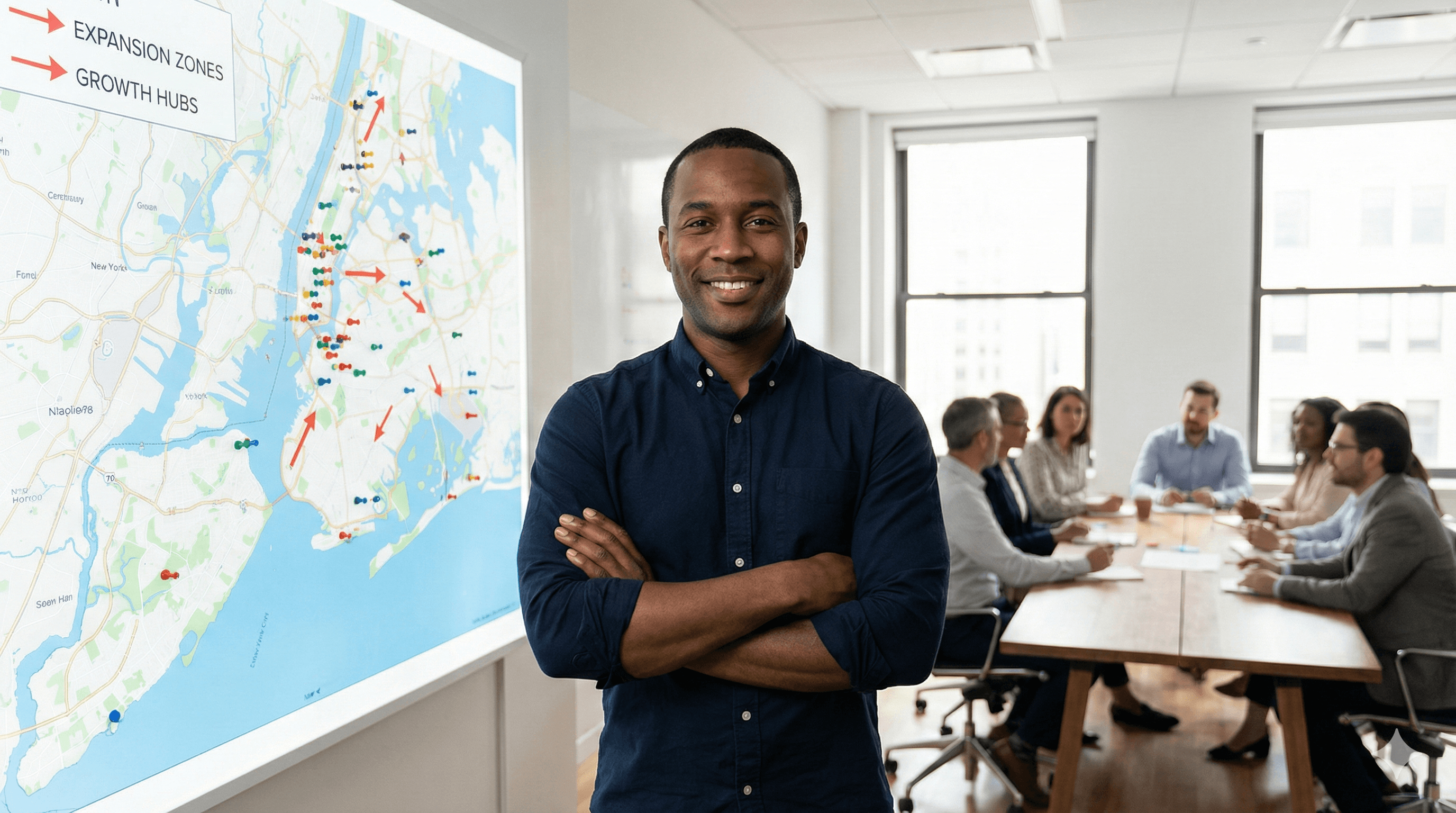
The email subject line read: "MBK Expansion - We need to talk."
It was from the Chancellor's office. We'd just finished our first year running My Brother's Keeper in five Brooklyn schools. The results were strong: attendance up, suspensions down, student engagement measurably higher.
Now they wanted us to scale it. Not to ten schools. Not to twenty.
To every district in New York City.
I sat there staring at my laptop. Five schools felt manageable. Thirty-two districts? That felt impossible.
I called my mentor, the superintendent who'd greenlit the original pilot. "They want us to go citywide. I don't even know where to start."
He laughed.
"Rashaun, you've got two choices. You can try to replicate what you did in Brooklyn and watch it fail in every context that isn't Brooklyn. Or you can build something that's designed to scale."
"What's the difference?"
Programs replicate. Culture scales.
The Trap We Keep Falling Into
Most people think scaling means multiplication: If it worked in five schools, just do the same thing in fifty schools.
That's how initiatives die.
Here's what happens: You create a beautiful program in School A. It works because you have a principal who believes in it, teachers who volunteered to participate, and students who are ready for change.
Then you copy-paste it to School B. Different principal who was told to implement it. Different teachers who didn't ask for it. Different students with different needs.
The program fails. And everyone blames "lack of buy-in."
The real problem? You tried to scale a program when you should have been scaling a culture.
By 2024, New York State had invested $172 million in My Brother's Keeper initiatives across 37 communities. But most of that money went toward programs - workshops, speakers, curriculum materials.
The communities that actually moved the needle? They didn't replicate programs. They built infrastructure for culture change.
The Conversation That Changed Everything
Before we expanded citywide, I spent three months visiting schools across NYC. Not to present. To listen.
In the Bronx, a principal told me: "We don't need another program. We need help building relationships with the men in our community who our students actually listen to."
In Queens, a dean said: "Your Brooklyn model won't work here. Half our students are English language learners. You didn't design for that."
In Harlem, a group of teachers said: "We've been doing MBK work for years - before the Mayor's office called it that. Don't come in here acting like you invented it."
Every school had different contexts. Different demographics. Different challenges. Different strengths.
If I showed up with a one-size-fits-all program, I'd be wasting everyone's time and $172 million in state funding.
That's when I learned about Targeted Universalism.
What Actually Works
Targeted Universalism is a framework developed by researcher john a. powell (lowercase intentional). It means:
Universal Goal + Targeted Strategies = Equity
Everyone is working toward the same outcome (universal goal), but the pathway to get there is customized based on specific barriers and assets in each context (targeted strategies).
A 2025 NYU report, "Closing the Experience Gap," proved that systemic redesign only works when it accounts for the intersection of race, ability, language, and socioeconomic status. You can't scale equity with a generic blueprint.
Here's how we applied it to MBK expansion:
The Universal Goal (Same Everywhere).
Increase the percentage of boys and young men of color who:
Feel connected to at least one adult in the school.
Believe they have a pathway to success.
Demonstrate leadership in their community.
Graduate prepared for college, career, or both.
That goal didn't change across districts.
The Targeted Strategies (Different Everywhere).
District 9 (South Bronx): Primary barrier: High mobility rate - students moving between schools mid-year. Targeted strategy: Created a "mentor follows the student" model where community mentors stayed connected even when students switched schools.
District 24 (Queens): Primary barrier: 60% English language learner population. Targeted strategy: Recruited bilingual mentors from the community and created materials in students' home languages. Partnered with local Bengali and Spanish-speaking organizations.
District 13 (Brooklyn): Primary barrier: Generational trauma from over-policing. Targeted strategy: Shifted from "school safety officers" language to "community navigators." Hired men from the neighborhood who understood the history and could rebuild trust.
District 2 (Manhattan): Primary barrier: High-achieving school culture that masked mental health struggles. Targeted strategy: Created safe spaces specifically for high-performing students to discuss pressure, anxiety, and the myth of perfection.
Same goal. Completely different approaches.
The Framework for Scale
You can't scale by replicating. You scale by building capacity.
Here's the three-part framework that took us from 5 schools to every NYC district:
1. Clear Outcome Metrics (The "What"). We didn't measure "program implementation." We measured student experience:
Percentage of students who can name an adult in the building who knows them personally.
Student-reported sense of belonging (measured quarterly).
Discipline disparities between Black male students and overall population.
Post-secondary enrollment and persistence rates.
If those numbers moved, the program was working - regardless of what it looked like.
2. Flexible Pathways (The "How"). Each school designed their own approach to moving those metrics. Some used:
Barbershop talks with local barbers coming into schools.
"Real Talk" circles during lunch.
Male teacher affinity groups.
Community mentor networks.
After-school basketball leagues with embedded mentorship.
We didn't mandate the method. We mandated the measurement.
3. Peer Learning Infrastructure (The "Why Keep Going"). Every quarter, principals and coordinators from across districts met to share what was working.
Not in a conference room with a presentation. In actual schools, watching programs in action.
The principal from District 9 who created the "mentor follows the student" model? She presented it to District 24, who adapted it for their ELL population.
The strategy from Brooklyn about community navigators? It got modified and adopted in three other districts.
Ideas flowed horizontally between practitioners, not vertically from a central office.
From Programs to Culture
By year three, something shifted.
Teachers stopped saying, "We're doing the MBK program."
They started saying, "This is how we do things here."
That's when you know you've scaled culture, not just a program.
One assistant principal told me: "I don't even remember what we did before MBK. The way we engage young men now - it's just who we are."
That's the difference. A program is something you add to your day. A culture is how you approach every moment.
The Bottom Line
Scaling from 5 schools to every NYC district wasn't about doing the same thing everywhere. It was about creating conditions for each community to solve for the same problem in their own way.
The schools that struggled? They were the ones trying to replicate Brooklyn's playbook in contexts where it didn't fit. They measured fidelity to the model instead of fidelity to the outcome.
The schools that thrived? They used the universal goal as their North Star and built targeted strategies that honored their students' actual reality.
You can't franchise culture change like you're opening McDonald's locations. Every community needs the same commitment to equity. But the pathway to get there has to be co-designed, not copy-pasted.
So here's my question: Are you trying to scale a program, or build the infrastructure for culture change?
And when you say "scale," do you mean "replicate what worked somewhere else," or "create conditions for success everywhere"?
About the Author
Related Articles


Subscribe to Our Newsletter
Get the latest insights on youth leadership, education consulting, mentorship, and AI in education delivered to your inbox.