The Leadership Program That Almost Didn't Happen
How a My Brother's Keeper pilot became a statewide youth leadership model by co-authoring the program with students.
 PCS Consultant5 min read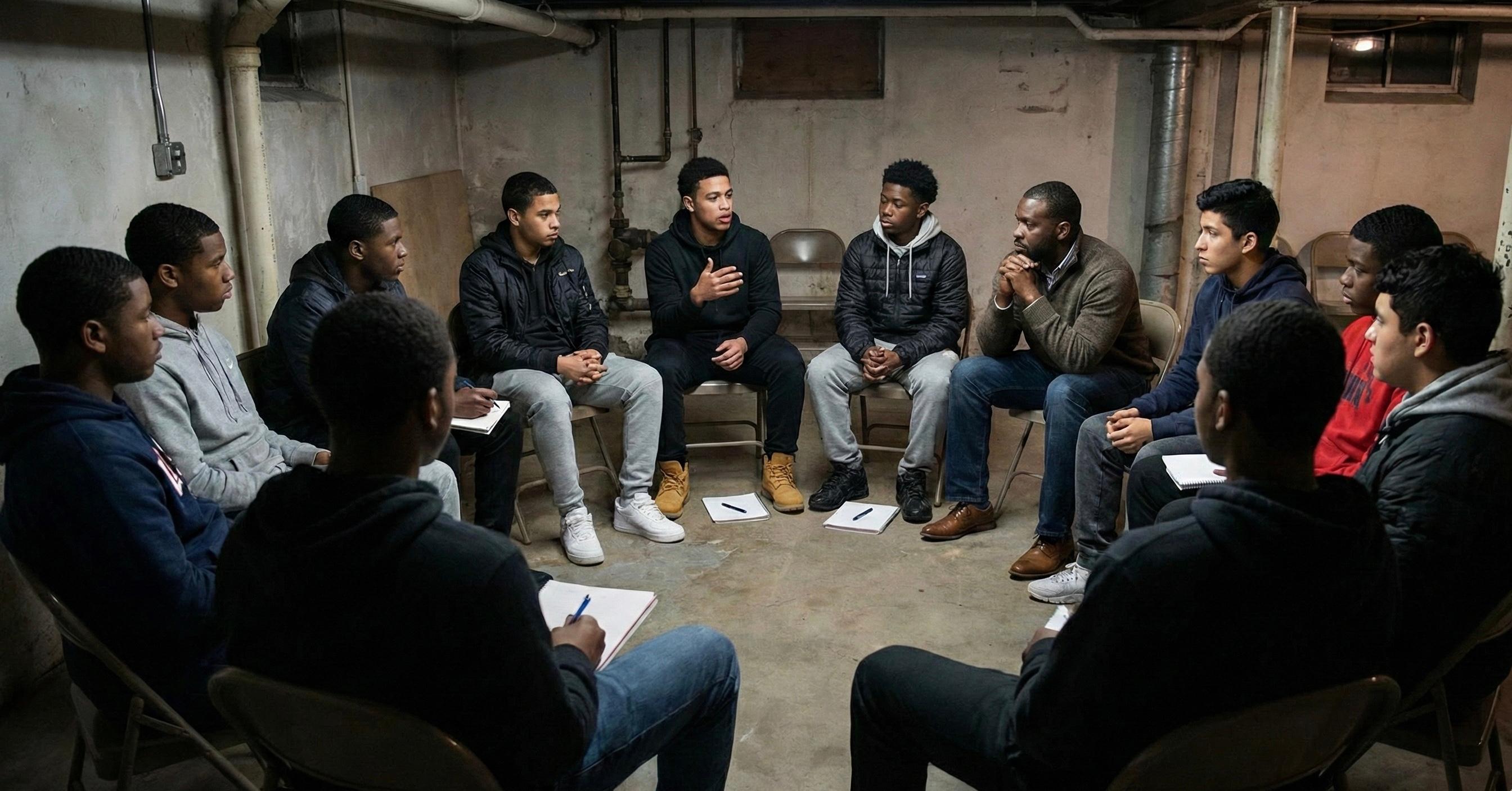
I was standing in a basement room in Brooklyn with $5,000, twelve young men who'd been told they were "at-risk," and no official curriculum.
The district supervisor had approved my proposal for a new My Brother's Keeper program—barely. "You have three months to show results," she said. "Or we're pulling the funding."
I looked around that windowless room at Isaac Elementary School. Fluorescent lights. Folding chairs. A whiteboard that didn't erase properly. This was supposed to be the foundation of something that would eventually reach every NYC district.
I had no idea where to start.
The Trap We Keep Falling Into
Here's what most leadership programs do: They create beautiful binders. They hire consultants to write curriculum frameworks. They schedule eight-week modules with names like "Developing Your Leadership Voice" and "The Five Pillars of Youth Empowerment."
Then they wonder why attendance drops after week two.
New York State became the first state in the nation to fund the My Brother's Keeper initiative in 2016, allocating millions to close achievement gaps for boys and young men of color. The pressure was enormous. Schools were expected to show measurable impact immediately.
Most programs responded by creating more structure. More rules. More top-down programming.
I did the opposite.
The Moment Everything Changed
Week one, I asked the twelve young men in that basement a simple question: "What do you want to learn?"
Jamal raised his hand. "Mr. Banjo, I don't want to be in another program where adults tell me what I need. We get that all day."
The room went silent.
I could have gotten defensive. I could have explained how much work went into getting this program approved, how lucky they were to be selected, and how they needed to show gratitude.
Instead, I said, "You're right. So here's what we're going to do. For the next three weeks, you'll design this program. You tell me what leadership means to you, what you actually want to learn, and what rules make sense."
The supervisor's voice was in my head: "Three months to show results."
I was about to find out if co-authoring the rules would work—or if I'd just handed twelve teenagers the rope to hang me with.
What Actually Works
In that first session, we put everything on the table. The young men told me the truth about every leadership program they'd been in:
"They bring in speakers who don't look like us and tell us to 'dream big.'"
"They make us do icebreakers when we've known each other since kindergarten."
"They act like we're broken and they're here to fix us."
"They talk about college like it's the only path, but my uncle makes more money in construction than my teacher does."
I wrote it all down on that smudged whiteboard.
Then I asked: "What would a leadership program look like if it actually respected your intelligence?"
Over three weeks, those twelve young men created the framework that would eventually scale to 37 communities across New York State:
Rule 1: Start with their reality, not our nostalgia. No more "when I was your age" stories. If you're going to reference the past, explain how it connects to what they're facing now—not how they should be grateful it's easier than it used to be.
Rule 2: Expertise comes from experience, not credentials. Bring in the barbers, the coaches, the uncles who are actually showing up in their lives. Stop excluding people because they don't have a title or degree.
Rule 3: Leadership is a practice, not a performance. We're not training them to give speeches at assemblies. We're teaching them how to navigate conflict, build trust, hold each other accountable, and create change in their actual environments.
Rule 4: Trust their intelligence. If something isn't working, they can say so. If they have a better idea, they can share it. We adjust in real-time, not after a semester-end survey that nobody reads.
Rule 5: Show up when nothing is wrong. Mentors can't only appear during a crisis. Consistency matters more than credentials.
The supervisor was skeptical when I shared the framework. "This sounds like you're letting them run the program."
"No," I said. "I'm letting them co-author it. There's a difference."
From 5 Schools to Every District
That pilot program at Isaac Elementary became the blueprint for expanding MBK from five schools to twenty-nine schools in our district. Then to every NYC district. Then statewide.
Not because we had the most money. Not because we had the fanciest materials. Not because we brought in celebrity speakers.
Because we treated young people like partners, not problems.
When $172 million in MBK funding eventually flowed through New York State, schools asked me: "What's the secret? How did you get such high engagement?"
There's no secret. Just a choice: Are you designing for young people, or with them?
The programs that failed? They're the ones that showed up with pre-made curricula and asked young people to fit themselves into it. They measured success by attendance sheets and post-surveys, not by whether students felt genuinely seen.
The programs that worked? They started with a question, not a lesson plan.
One superintendent told me, "This approach sounds risky. What if they design something that doesn't align with our goals?"
I asked him: "What's riskier—giving them a voice in the process, or spending another $50,000 on a program they'll abandon after three weeks?"
The Bottom Line
That basement program at Isaac Elementary had 100% attendance for three months. Zero behavioral incidents. Twelve young men who went from being labeled "at-risk" to designing a framework that influenced how an entire state approached youth development.
The supervisor who gave me three months to show results? She became one of MBK's most prominent advocates.
Jamal—the young man who called me out in week one—now runs a youth program in Far Rockaway. He tells me he still uses those five rules.
Leadership programs don't fail because young people aren't ready. They fail because we're not willing to share authorship.
So here's my question: If you're designing a program for young people right now, who's actually holding the pen?
About the Author
Related Articles



Subscribe to Our Newsletter
Get the latest insights on youth leadership, education consulting, mentorship, and AI in education delivered to your inbox.