I Needed $1.4 Million in Pipeline: Why Activity Doesn't Equal Progress
Discover why most youth programs fail to create lasting impact because they measure activity instead of direction—and learn the framework that actually works.
 PCS Consultant10 min read
In 2018, I was sitting in my office at a startup, completely burned out, dreaming about leaving corporate to start my own consulting firm.
I had a small LinkedIn following—maybe 5,000 people. I'd been posting randomly. Writing answers on Quora. Engaging on Reddit. Trying to build momentum for the day I'd finally go out on my own.
But I had no idea if any of it was working.
So I did what I'd seen every entrepreneur guru on the internet tell me to do: I hustled harder. More posts. More platforms. More content.
For six months, I showed up every single day. I answered questions on Quora, writing detailed responses showing off everything I knew about sales strategy. I posted motivational quotes on Instagram. I replied to threads on Reddit. I was everywhere.
And at the end of those six months, when I finally checked the spreadsheet I'd been using to track leads, I saw the results.
Zero. Zero consulting clients. Not one discovery call.
Six months of hustling to nowhere.
And that's when I realized: Activity doesn't equal progress.
The Mistake I See Everywhere
I tell that story because I see educators, youth professionals, and consultants making the same mistake I made.
They're working incredibly hard. Showing up to every meeting. Saying yes to every opportunity. Running workshops. Leading programs. Grinding.
But when I ask them, "What's the goal? What are you actually building toward?" they pause.
Because they're so focused on activity, they've lost sight of direction.
Here's what I learned the hard way: If you don't have a map, it doesn't matter how fast you're running. You're still lost.
The Moment I Stopped Hustling and Started Building
After that brutal six-month reality check, I sat down with a notebook and asked myself a question I should've asked from the beginning:
"What do I actually need to make this work?"
I wanted to make $350,000 in my first year as a consultant. That was the number I needed to replace my income and feel confident going full-time.
So I worked backward.
If I was going to make $350K and I closed clients at a 25% rate, I'd need $1.4 million in pipeline.
If my average client paid $6,250 per month and stayed for six to eight months, I'd need about thirty-two business prospects in my pipeline at all times.
If I wanted to ramp up that pipeline in ten to twelve weeks, I'd need roughly three new ideal prospects entering my funnel every single week.
Suddenly, I had clarity.
I didn't need to be on five platforms. I didn't need to hustle harder.
I needed a system that consistently delivered three qualified prospects per week.
Everything else was noise.
The Shift That Changed Everything
Once I had that number—three prospects per week—I looked at everything I was doing and asked one question:
"Does this actually move me toward that goal?"
Quora? No. The people reading my answers weren't my ideal clients. They were curious learners, not decision-makers looking to hire a consultant.
Instagram graphics about sales strategy? No. My target clients weren't scrolling Instagram for business advice.
Reddit threads? No. Great for engagement. Terrible for conversions.
So I cut it all.
I deleted Instagram from my phone. I stopped checking Quora. I quit Reddit entirely.
And I went all-in on LinkedIn—the one platform where my actual target customers were spending time.
Instead of being mediocre on five platforms, I got really, really good at one.
By November 2019, twelve weeks after officially launching my business, I had a clear path to $350K. By the end of year one, I'd made $534K. And I was working fewer hours than I had in my corporate job.
That's the difference between activity and direction.
What This Has to Do with Youth Work
You might be wondering, "Rashaun, what does building a consulting business have to do with youth development?"
Everything.
Because here's what I see constantly: Youth programs that are all activity and no direction.
Schools running mentorship programs without clear outcomes.
Nonprofits launching initiatives without measurable goals.
Educators attending every professional development session without a plan for how it connects to student impact.
Everyone's busy. But nobody's building.
And the young people? They feel it.
They see adults running around, starting programs, hosting events, giving speeches. But nothing actually changes.
Because we're confusing motion with progress.
The Conversation That Made This Clear
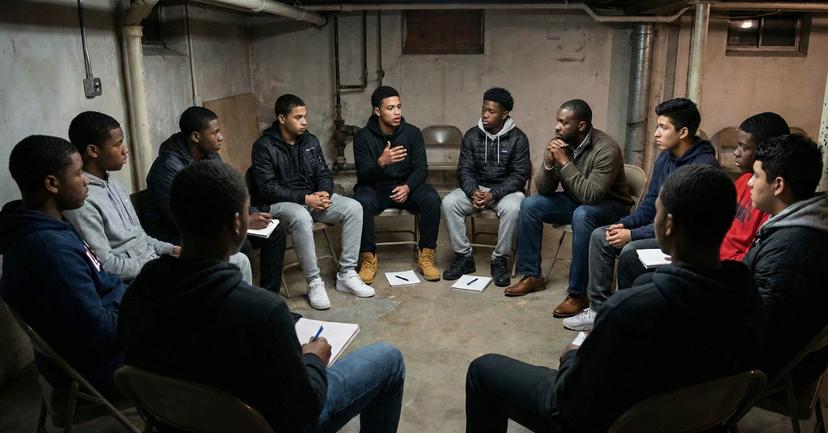
A few months ago, I was consulting with a school district that wanted to expand their My Brother's Keeper program.
The superintendent was frustrated. "We've been doing MBK for three years. We have a full-time coordinator. We run weekly sessions. But I don't know if it's actually working."
I asked him, "What does 'working' mean to you?"
He paused. "I guess... students staying engaged? Fewer discipline issues? Better attendance?"
"Okay," I said. "Let's get specific. If this program is successful, what changes in the next twelve months?"
He thought about it. "I'd want to see a 20% reduction in suspensions for the young men in the program. And I'd want 90% of them to graduate on time."
Now we had something to work with.
I asked, "Do you currently track those metrics for MBK participants?"
"Not really."
"Then how do you know if the program is working?"
Silence.
Here's the truth: He didn't know. Because he'd been measuring activity (number of sessions, attendance rates, events hosted) instead of outcomes (suspensions, graduation rates, college acceptance).
Activity made him feel like something was happening. But direction would've told him if it was actually working.
The Framework That Actually Works
Here's what I tell every educator, every youth professional, every person trying to make an impact:
Start with the end goal. What does success actually look like? Be specific. Use numbers. "Improve student engagement" is too vague. "Increase daily attendance by 10% for program participants" is a goal you can measure.
Work backward. If that's your goal, what needs to happen to get there? What are the milestones? What are the leading indicators?
Cut everything that doesn't move you toward that goal. This is the hard part. You'll have to say no to things that feel important but don't actually contribute to your outcome.
Track your progress. You can't improve what you don't measure. Check your data weekly. Adjust your strategy based on what's working.
Be willing to kill what's not working. Just because you've been doing something for three years doesn't mean it's effective. Be ruthless about cutting programs, strategies, or activities that aren't moving the needle.
What Changes When You Get This Right
When schools implement My Brother's Keeper with clear goals and consistent tracking, the results are undeniable.
Suspensions drop. Attendance increases. Graduation rates go up. College acceptance rates improve.
But more importantly, students feel the difference.
Because when adults have clarity on what they're building, students experience structure, consistency, and progress.
They're not just showing up to "another program." They're participating in something intentional. Something designed with their success in mind.
And that matters.
The Bottom Line
I wasted six months on Quora because I confused activity with progress.
That superintendent was running an MBK program without clear outcomes because he was measuring motion instead of impact.
And I see this pattern everywhere: people working incredibly hard but building nothing.
So here's my question: What are you doing right now that feels productive but isn't actually moving you toward your goal?
And what would happen if you stopped?
About the Author

Related Articles


Subscribe to Our Newsletter
Get the latest insights on youth leadership, education consulting, mentorship, and AI in education delivered to your inbox.