The Men's Brunch That Almost Didn't Happen: Rethinking Father Engagement
How a unconventional approach to father engagement transformed participation and created lasting connections between male figures and schools.
 PCS Consultant7 min read
Two years ago, Dr. Brown called me about a problem.
"Rashaun, we need to get more fathers involved in the school. I've tried everything. Breakfast meetings. Evening events. Nothing's working. These men just don't show up."
I asked him one question: "Have you asked the students who they actually want there?"
That question changed everything.
Because it turned out, the students didn't just want "dads." They wanted the men who actually showed up in their lives. Uncles. Older brothers. Cousins. Coaches. Barbers. The guy from the corner store who always asked how school was going.
Three months later, we hosted our first Brotherhood Men's Brunch.
Fifty-seven men showed up.
Not to hear about attendance policies. Not to get lectured about grades. But to eat, to talk, and to hear directly from young men about what they actually needed.
That event is still happening today. And it's taught me something that every school, every youth organization, and every community program needs to understand:
You're probably inviting the wrong people.
The Invitation I Kept Getting Wrong
When I first started working with schools on father engagement, I did what everyone does.
I sent letters home: "Parents, please join us for our Father's Night."
I made announcements: "We'd love to have dads participate in our mentoring program."
I even tried the guilt angle: "Research shows father involvement improves student outcomes."
The results were always the same. Eight guys would show up. Maybe twelve if we offered free food.
And I'd leave frustrated, thinking the same thing everyone thinks: "These men just don't care."
Then I had a conversation that completely shifted my perspective.
I was working with a group of young men in a My Brother's Keeper program in Brooklyn. We were talking about male role models. I asked them, "Who's someone in your life that really shows up for you?"
One young man said, "My uncle James. He picks me up from school twice a week. Takes me to get a haircut. Checks my grades."
I asked, "Does your uncle ever come to school events?"
"Nah. Those are for parents."
And there it was.
The men who were actually doing the work of fatherhood didn't think the invitations were for them.
Who's Actually Doing the Work
Let me tell you about Marcus.
Marcus is a barber in Far Rockaway. Thirty-eight years old. No kids of his own.
But every Saturday morning, five or six young men from the neighborhood show up at his shop. Some for haircuts. Most just to talk.
Marcus knows which kids have court dates coming up. He knows who's struggling in math. He knows whose mom just lost her job.
When I met Marcus, I asked him if he'd ever been invited to a school event.
He laughed. "Man, I'm not a parent. That's not my place."
But he was already doing the work.
He was the one these young men called when they needed advice. He was the one showing them how to tie a tie before job interviews. He was the one having the hard conversations about respect, responsibility, and manhood.
Marcus wasn't on any school's radar. But he was exactly who those students needed in the room.
The Shift That Changed Everything
When we planned that first men's brunch, we did something different.
We asked the students: "Who are the men in your life that you'd want us to invite?"
They gave us names. Uncle James. Coach Mike. Mr. Thomas from the barbershop. Their older brother who just graduated. Their mom's boyfriend who drives them to basketball practice.
Then we changed the invitation.
Instead of "Father's Night," we called it a Brotherhood Brunch.
Instead of "We want parents," we said, "We want the men who show up for these young people."
Instead of lectures about attendance, we created space for conversation.
The response was immediate.
Men who'd never stepped foot in the school showed up. Not because they felt obligated. But because they felt seen.
What Happened in That Room
That first brunch, I watched something powerful unfold.
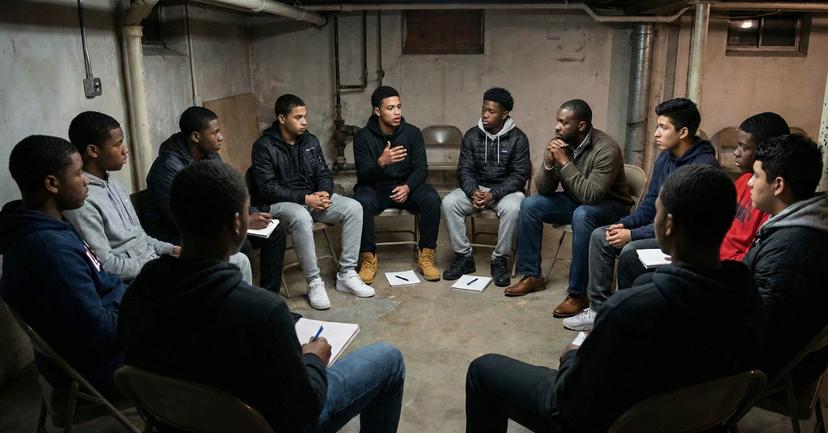
We set up round tables. Each table had five to six men and two to three students. We gave them one prompt:
"Young men, tell the men at this table what you actually need from us. And men, listen without trying to fix anything. Just listen."
What came out was real.
One student said, "I need y'all to stop assuming I'm gonna fail just because I'm Black."
A man at the table, a coach, leaned forward. "Say more about that."
The student opened up. Talked about teachers who watched him closer than other kids. Who assumed he was the problem before asking questions.
The coach nodded. "I see you. That's real."
Another student said, "I need someone to teach me how to handle money. My mom's working two jobs. I want to help but I don't know how."
An older brother at the table pulled out his phone. "Let me show you this budget app I use. We can set it up together after this."
No speeches. No PowerPoints. Just men and young men being honest with each other.
By the end, half the room was exchanging phone numbers.
The Framework That Keeps It Going
Here's what we learned from that first event:
Stop assuming you know who should be in the room. Ask the students. They'll tell you exactly who matters in their lives.
Make it about listening, not lecturing. Men don't show up to be told what they're doing wrong. They show up when they feel like their presence actually matters.
Create space for real conversation. Round tables beat panel discussions every time. Men want to connect, not perform.
Make it a habit, not an event. That first brunch turned into monthly Brotherhood sessions. Consistency matters more than scale.
Celebrate the men who show up. Not with awards or certificates. But with acknowledgment that the work they're doing matters.
The Conversation That Hit Me
At the end of that first brunch, Marcus, the barber, came up to me.
"Man, I didn't think this was for me," he said. "I'm just the barber."
I looked at him. "How many of these young men trust you?"
He thought about it. "Maybe six or seven."
"And how many of them have fathers actively in their lives?"
"Maybe two."
"Then you're not 'just the barber.' You're exactly who needs to be in this room."
He's been coming ever since. And he's brought other men from the neighborhood with him.
The Pattern I See Everywhere
I've helped set up these brunches in schools across New York. Queens. Brooklyn. Long Island.
Every time, the same thing happens.
Schools think they have a "father engagement problem."
What they actually have is an invitation problem.
They're looking for traditional nuclear family structures in communities where family looks different.
They're sending formal invitations to men who don't see themselves in formal spaces.
They're creating events for people who don't exist instead of creating space for the people who do.
And meanwhile, the Marcus's of the world, the Uncle James's, the Coach Mike's are doing the work of mentorship every single day without any acknowledgment or support.
What Changes When You Get It Right
Here's what happened after we started doing these brunches consistently:
Attendance went up. Not because we lectured fathers about showing up. But because young men felt more connected to school.
Discipline issues went down. Not because we got stricter. But because students had more men checking in on them.
College applications increased. Not because of a new program. But because more men were helping students navigate the process.
And the men? They kept showing up.
Because they finally felt like their presence mattered.
The Bottom Line
I'm from Far Rockaway, Queens. Son of a Nigerian father and a Brownsville mother.
I know what it's like to need men in your corner. I know what it feels like when they show up. And I know what it feels like when they don't.
But I also know this: The men are there. They're in the barbershops. They're on the sidelines at basketball games. They're driving students home from practice.
They're just waiting to be invited the right way.
So here's my question: Who are the men actually doing the work in your students' lives? And what would happen if you invited them into the room?
About the Author
Related Articles


Subscribe to Our Newsletter
Get the latest insights on youth leadership, education consulting, mentorship, and AI in education delivered to your inbox.